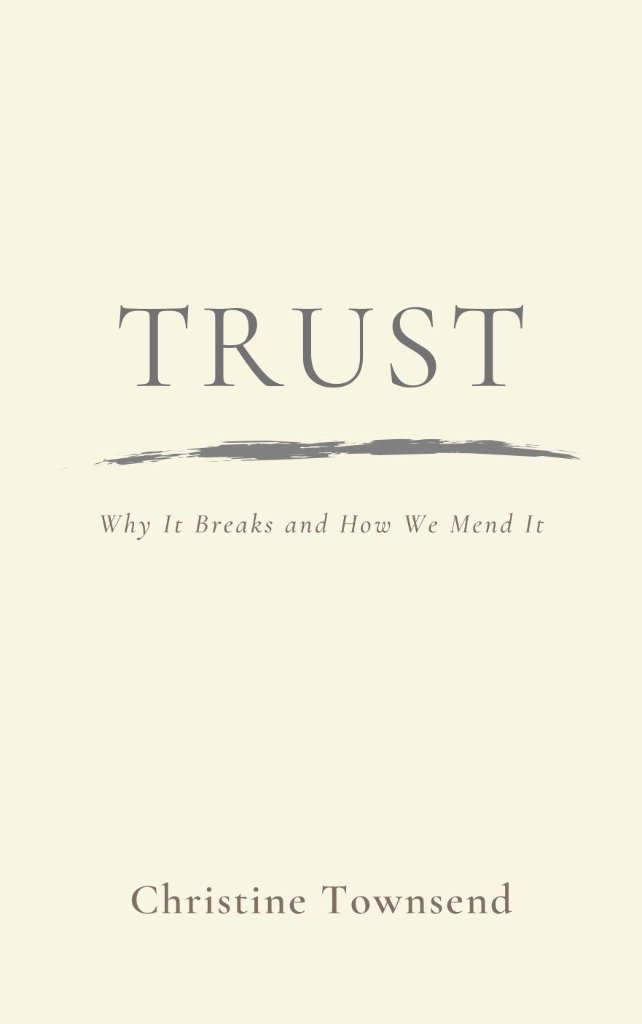
Trust: Why It Breaks and How We Mend It
A practical guide for institutional leaders, public servants, and communities.
About Trust
Trust is the quiet infrastructure holding families, organizations, and societies together. When it breaks, the effects are profound, emotionally, professionally, and structurally. But trust does not collapse in a single moment; it erodes through patterns of behavior, silence, and avoidance. And it can be rebuilt in the same way: slowly, deliberately, and with integrity.
Trust: Why It Breaks and How We Mend It explores the psychology, behavior, and systems that shape trust in modern life. Drawing on research, lived experience, and years of work in communication, public service, and crisis leadership, Christine Townsend examines how trust forms, why it fractures, and what genuine repair requires.
This book looks beyond simple explanations or surface-level solutions. It considers trust at every level, between individuals, inside organizations, across communities, and within the institutions people depend on. It traces the impact of historical harm, the pressures of modern leadership, and the changing information environment that has made credibility harder to hold.
Through clear analysis and grounded reflection, Townsend introduces four behavioral threads that underpin every example of trustworthy conduct: clarity, consistency, care, and courage. These threads recur across the book's stories and research, forming a practical and humane framework for rebuilding trust in any context.
What You'll Discover
Why I Wrote This Book
Trust broke early in my career, and I saw the cost firsthand. I've spent two decades managing trust in its most fragile moments, during crises, investigations, public protests, and institutional failures. I watched capable leaders lose credibility, not through malice, but through patterns they didn't recognize. I saw communities withdraw from institutions that had failed them, sometimes for generations.
And I realized that most of us are never taught how trust works; how it forms, why it fractures, or what repair actually requires.
This book began as an attempt to understand what I was seeing: organizations desperate to regain credibility but unclear on how; leaders exhausted by the erosion they couldn't name. Trust is the book I wish I'd had twenty years ago, not a manifesto or a quick fix, but an honest examination of what trust is, why it matters, and what genuine repair requires. It's grounded in research, informed by experience, and written for anyone working in environments where belief matters.
Download Chapter 1: The Trust Deficit
Get a free sample of Trust and discover why trust became unstable
Frequently Asked Questions
What is Trust: Why It Breaks and How We Mend It about?
Trust examines how trust forms, why it breaks, and how it can be rebuilt at personal, interpersonal, organizational, and institutional levels using the Four Threads Framework: clarity, consistency, care, and courage.
Who should read this book?
Organizational leaders, HR professionals, public servants, communication professionals, and anyone interested in understanding and rebuilding trust.
What is the Four Threads Framework?
The Four Threads Framework is a diagnostic tool measuring trust capacity across four dimensions: clarity, consistency, care, and courage. Take the free assessment at fourthreadsframework.com.
Where can I buy the book?
Trust is available on Amazon in Kindle, paperback, and audiobook, or as a signed paperback directly from this website.
Table of Contents
Part One: The Trust Deficit
- • Why Trust Became Unstable
- • The Erosion We Can All Feel
- • The Proximity Paradox
- • Trust as Currency
- • Why Trust Matters to Everyone
Part Two: The Psychology of Trust
- • The Biology of Belief
- • The Stories We Inherit
- • The Fairness Instinct
- • Belonging: The Quiet Foundation
- • Self-Trust
Part Three: Trust Between People
- • The Emotional Contract
- • Empathy as Practice
- • The Rhythm of Repair
- • When Relationships Can't Be Saved
- • The Courage to Try Again
Part Four: Trust as Social Art
- • How Trust Travels
- • The Cost of Suspicion
- • Reciprocity and Credibility
- • Power and Humility
- • The Role of Conflict
Part Five: Trust in Institutions
- • The Digital Distance
- • The Unequal Currency
- • The Inherited Balance Sheet
- • The Authenticity Trap